




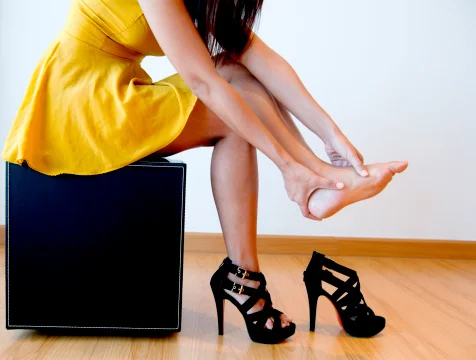
The Impact of High Heels on Foot Health
From tiny kitten heels and sky-high stilettos to pumps and sling-backs, there is no denying that high heels are one of the staples of any woman’s wardrobe. And while they may be good for your social life, they are not so great when it comes to the health of your feet.
High heels have long since had the stigma of being bad for health (and comfort), but that doesn’t stop women from wearing them. In fact, a survey conducted by the American Podiatric Medical Association showed that 42% of women admitted they would wear a shoe they liked even if it caused discomfort. 73% reported having a shoe-related foot issue.
It is clear from these statistics that, worldwide, women are sacrificing far more than their bank balances for the sake of foot fashion. Wear heels too often, and you are likely to end up with permanent foot problems — and not just in your feet.
What Happens When You Wear High Heels?
When you wear high heels, you change the way you walk from the natural way we evolved to an entirely unnatural one. We are designed to walk from heel to toe, with the foot supporting the leg at roughly a 90-degree angle. The ankle joint typically has a wide range of motion, but all of that changes when heels come into play.
How High Heels Affect the Body
Feet
Our feet are designed to distribute weight evenly and provide cushioning to protect the rest of the body. When you wear high heels, that distribution shifts forward.
Most of your body weight is transferred to the balls of your feet and toes. Even a four-inch heel can increase pressure on the front of your foot by nearly a third. Your natural walking pattern also changes, becoming shorter and more abrupt instead of smooth and balanced.
This unnatural pressure can lead to several issues:
- Corns and calluses – thickened skin that can become painful
- Bunions – bony deformities at the base of the big toe
- Hammertoe – a deformity causing toes to bend permanently
- Metatarsalgia – a burning pain in the ball of the foot
- Ingrown toenails – painful nail growth into the surrounding skin
Ankles and Calves
Wearing high heels forces your ankles forward, which can restrict circulation and strain the Achilles tendon.
Over time, the tendon can tighten and lose flexibility, increasing the risk of injury when switching back to flat shoes or walking barefoot.
Common issues include:
- Spider veins caused by poor circulation
- Achilles tendinitis leading to chronic ankle pain
- Long-term tendon damage affects mobility
Knees
High heels change the angle at which your foot strikes the ground, placing extra stress on the knee joints.
Over time, this added pressure can contribute to joint damage and increase the risk of osteoarthritis — especially with higher heels.
Lower Back
The lower back is particularly vulnerable when wearing high heels. The shift in posture can lead to increased strain and discomfort.
There is also evidence linking frequent heel use to changes in spinal curvature, which may contribute to conditions such as sciatica, a painful nerve condition that can radiate down the leg.
How to Reduce the Impact of High Heels
So, are you ready to give up heels entirely? Probably not — and that’s fair enough. But there are ways to reduce the damage while still wearing them.
Practical Tips for Wearing Heels More Safely
- Avoid wearing high heels for long periods
- Choose days with less walking or standing when wearing heels
- Rotate your footwear to reduce repeated strain
- Buy the correct size — shop later in the day when feet are slightly swollen
- Use insoles to prevent slipping and improve comfort
- Stick to lower heels (two inches or less where possible)
- Opt for wider heels for better stability and support
- Avoid narrow, pointed toe designs
- Stretch your calves and feet regularly
- Give your feet breaks by switching to flats when possible
Final Thoughts
High heels might look great, but they come with a cost. Your feet carry your entire body weight every day, so it’s worth making choices that support them.
You don’t have to ditch heels completely; just be smart about when and how you wear them.