




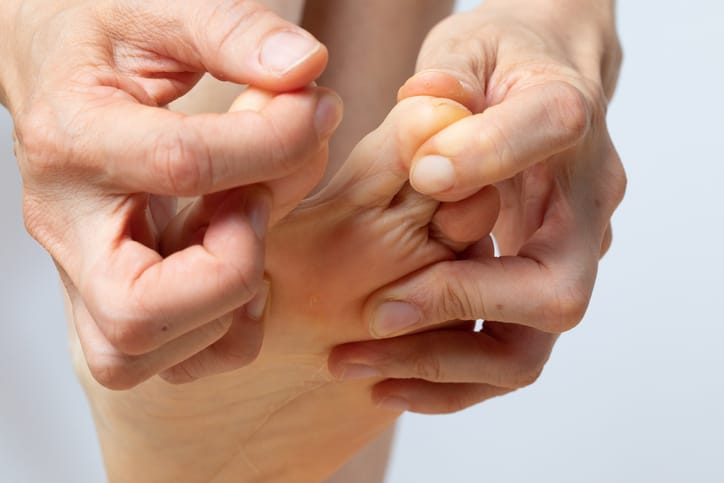
Many of us are on our feet constantly, so it’s no surprise that our feet are prone to a wide range of injuries that can affect our daily lives. One of the most common deformities involves the bending of one or both joints in the second, third, fourth, or fifth toes. This is known as hammertoe and can put pressure on the toe when wearing shoes, leading to problems.
What Causes Hammertoe?
People can suffer from hammertoe for a variety of reasons. These include wearing ill-fitting shoes, rheumatoid arthritis and injuries to the foot. Hammertoe can also be suffered among those with poor circulation and diabetes.
There are two forms of hammertoe that a person can experience. The first is known as a flexible hammertoe, which means the toes can still move at the joint. This is considered a less severe form of hammertoe and can often be easily corrected.
Rigid hammertoe is seen as more serious. If the tendons become too rigid, it often means the toe cannot be moved. In this instance, surgery is often required to rectify the problem.
What Are the Symptoms of Hammertoe?
People can experience a number of different symptoms, but overall, you should seek specialist medical help or advice if you have any of the following symptoms:
- A toe stuck in an upside-down ‘V’ position
- Experiencing pain at the top of a bent toe
- Difficulty and pain when attempting to move the toe joint
- Toe joints are taking on an inflamed red colour
- Pain on the ball of the foot beneath the bent toe
When Should I Seek Specialist Help?
Generally, if you experience any of the aforementioned symptoms, it can be a good idea to at least seek medical advice in the first instance. Chiropody and podiatry clinics are often used by those who suffer from hammertoe, as they can offer up-to-date assessment methods, ensuring the right diagnosis is made.
Moving forward, the clinic can ensure the treatment delivered is effective, with clinics often focusing on the cause of the problem rather than its symptoms.
Are There Any Steps I Can Take?
Seeking professional help is the most important step. But there are other steps a person with hammer toe can take to relieve pain.
- Ensure you wear shoes that fit; ill-fitting shoes will only exacerbate the condition
- Padding out areas around the bony part of the toe can help relieve pain, also
- Some specialists may prescribe medication that can help reduce the inflammation and pain
- If you suffer from a series of foot problems, it can be a good idea to measure your feet each time you purchase new shoes
Taking care of our feet is just like taking care of any other part of our body: we need to inspect them regularly and seek professional help as and when required. Simply ignoring the problem will only make it worse over time.