Spectrum Foot Clinics
Verrucae can become painful, persistent or uncomfortable, particularly when they develop on weight-bearing areas of the foot. Our podiatry and foot-care team can assess the affected area, confirm whether it is a verruca and recommend an appropriate treatment plan.
Appointments from €80


Professional Foot Care
A verruca is a type of wart that develops on the foot, most commonly on the sole or around the toes. It is caused by the human papillomavirus (HPV), which can enter the skin through small breaks or areas of damaged skin.
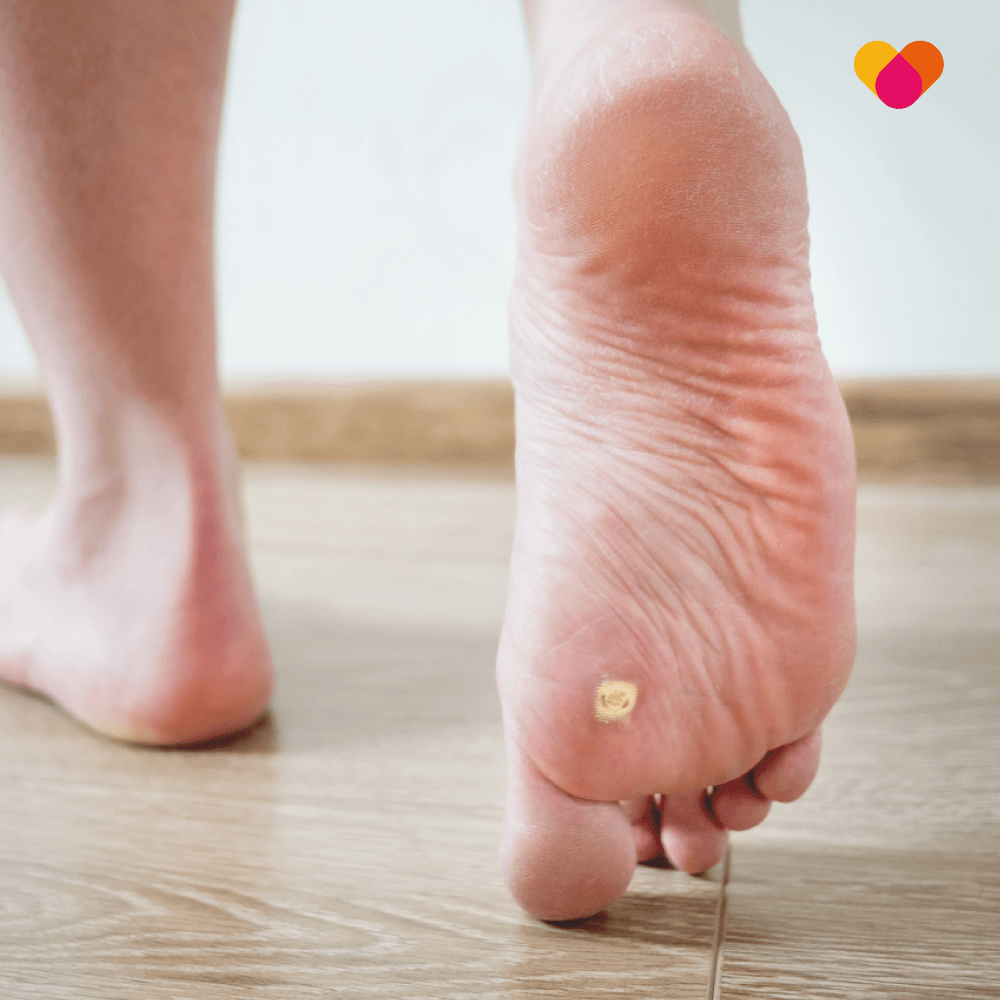
Some verrucae cause very little discomfort and may eventually disappear without treatment. Others can become painful, spread across the foot or remain for months or longer. Verrucae located underneath the heel or ball of the foot can be particularly uncomfortable because of the pressure placed on them when standing and walking.
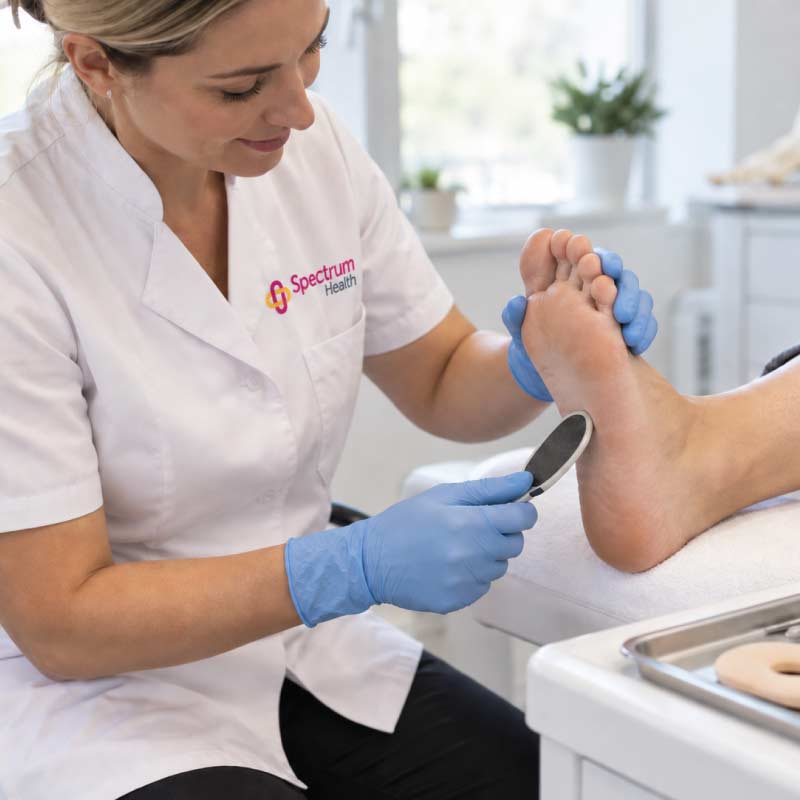
At Spectrum Foot Clinics, your clinician will examine the affected area and assess the size, location and appearance of the verruca. Where treatment is appropriate, they can reduce overlying hard skin, apply a suitable professional treatment and provide advice on caring for the area between appointments.
Understanding the Problem
Verrucae and corns can sometimes look similar, particularly when they develop underneath the foot, but they have different causes.
If you are unsure whether you have a verruca, corn or another skin condition, a professional assessment can help identify the problem and determine the most appropriate next step.
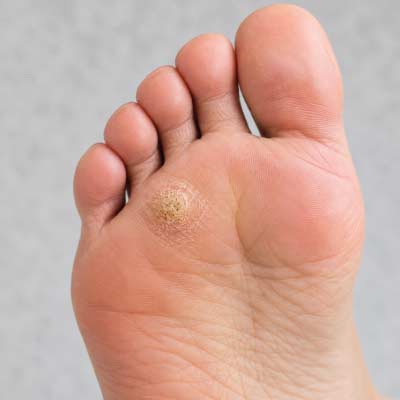
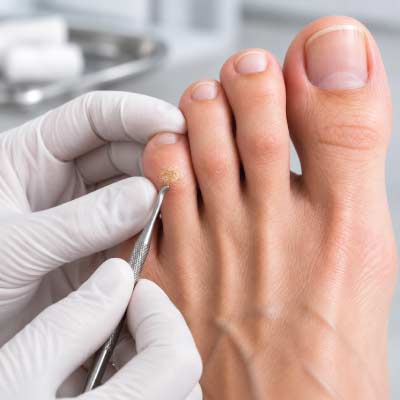
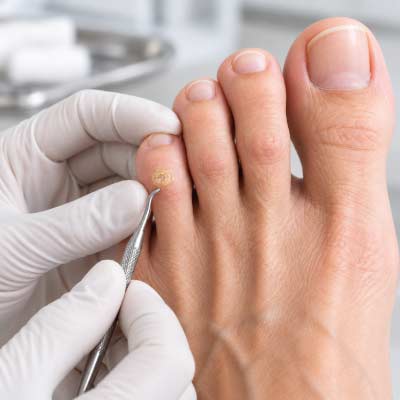
A verruca is a viral skin growth caused by HPV. It may have a rough or uneven surface, with small dark dots sometimes visible within the affected area. The natural lines of the skin are usually interrupted by the verruca.
A corn develops because of repeated pressure or friction rather than a viral infection. It usually consists of an area of thickened skin with a dense central core. The natural lines of the skin generally continue across a corn rather than being interrupted.
Common Signs
Verrucae can vary considerably in size and appearance. Corns, calluses and other skin conditions can sometimes resemble a verruca. Your clinician will examine the area before recommending treatment.
Common Causes
Verrucae are caused by HPV, a common virus that can infect the outer layers of the skin. The virus can spread through direct skin contact or indirectly from contaminated surfaces.
The virus is more likely to enter the skin when it is wet, softened or damaged.
It can take some time for a verruca to become visible after exposure to the virus. Avoiding direct contact with the affected area and taking simple precautions in communal environments can help reduce the risk of spreading it.
Types Of Verrucae We Treat

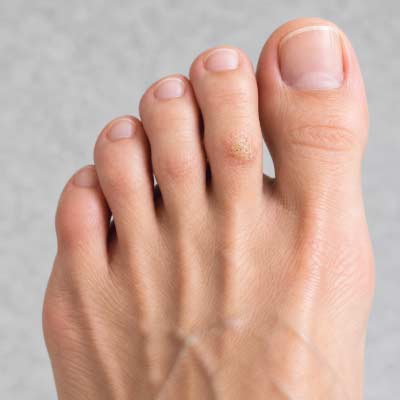
A solitary verruca appears as a single affected area, commonly on the sole of the foot or around the toes. It may develop a layer of hard skin over the surface, particularly when located on a weight-bearing area.

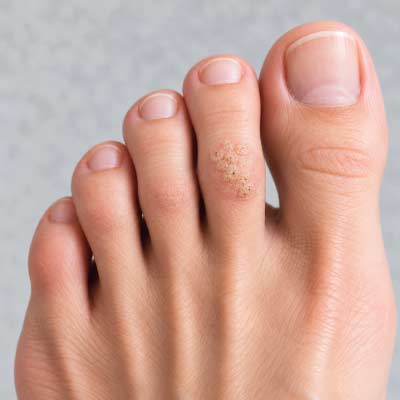
Mosaic verrucae are groups of smaller verrucae that form together across an area of skin. They may cover a larger area than a single verruca and can sometimes be more persistent.

Verrucae frequently develop underneath the heel or ball of the foot. Body weight can press the affected tissue into the foot, making the area uncomfortable when standing, walking or exercising.

Some verrucae remain for an extended period or return after previous treatment. These may require further assessment and a structured treatment plan over a number of appointments.
Your Appointment
Treatment begins with an assessment of the affected area. Your clinician will check whether the problem is a verruca or another foot condition and discuss how long it has been present, whether it is painful and any previous treatments you have tried
Where appropriate, treatment may include:

Verrucae often require more than one treatment session. The number of appointments needed will depend on factors such as the size, location and duration of the verruca and how it responds to treatment.
What To Expect
Your clinician will ask when you first noticed the verruca, whether it causes pain or discomfort and whether you have already tried any treatments. You should also mention relevant health conditions or medications that may affect your feet, circulation or skin.
The affected area will be examined to confirm whether it appears to be a verruca or another condition such as a corn or callus. Your clinician will assess its size, location and appearance and may also check the surrounding skin and overall health of your foot.
Where it is safe and appropriate, overlying hard skin may be carefully reduced before a professional treatment is applied to the verruca. Healthy surrounding skin will be protected and the area may then be dressed.
Your clinician will explain how to look after the area following treatment and whether any home care is recommended. Verruca treatment commonly involves follow-up appointments so that progress can be reviewed and further treatment provided where necessary.
Book Appointment
FAQ
Verrucae can sometimes return after treatment or appear in another area because they are caused by a viral infection. Treatment also does not always produce an immediate response, and some verrucae can take time to resolve.
There are several steps you can take to help reduce the risk of spreading the virus:
The aim of treatment is to manage the existing verruca while also reducing the likelihood of the virus spreading to other areas of the foot or to other people.
Consider arranging an appointment if:
If you have diabetes, poor circulation or reduced sensation, seek professional advice before attempting to treat a verruca yourself. Damage to the surrounding skin can be more difficult to detect or heal in people with certain underlying health conditions.
Some verrucae may eventually disappear without treatment, while pharmacy treatments are also available for suitable patients.
Over-the-counter treatments commonly require regular application over a period of weeks or months. Follow the instructions carefully and avoid applying treatment to healthy surrounding skin.
Do not cut, pick or attempt to remove a verruca with a blade or other sharp object. This can damage healthy skin and may increase the risk of the virus spreading.
Self-treatment may not be suitable if the area is painful, bleeding, inflamed or difficult to identify. You should also seek professional advice before using verruca treatments if you have diabetes, poor circulation, reduced sensation or another condition affecting the health of your feet.
A pharmacist, podiatrist or other qualified healthcare professional can advise whether a particular treatment is appropriate for you.
Yes. A podiatrist can assess the affected area, confirm whether it appears to be a verruca and recommend an appropriate treatment plan. Where suitable, treatment may involve reducing overlying hard skin and applying a professional verruca treatment.
Some treatments can cause temporary sensitivity or discomfort, particularly when the verruca is located on a weight-bearing area. Your clinician will explain what to expect before treatment and will take steps to protect the surrounding healthy skin.
There is no fixed treatment time. Some verrucae respond relatively quickly, while others require several appointments over a longer period. Size, location, how long the verruca has been present and individual response to treatment can all affect how long it takes.
Yes. The body’s immune system can eventually clear the virus without treatment, although this may take months or sometimes longer. Treatment may be considered when a verruca is painful, persistent, spreading or interfering with normal activities.
Verrucae are caused by a virus and often interrupt the natural lines of the skin. Small dark dots may also be visible. Corns usually develop because of pressure or friction and often have a hard central core. Because the two can look similar, professional assessment can be helpful.
Yes. The virus that causes verrucae can spread through direct skin contact or through contaminated surfaces. Wet or damaged skin can make transmission easier, which is why communal showers, swimming pools and changing areas are commonly associated with spread.
Avoid picking or scratching the area, wash your hands after touching it and do not share towels, socks or footwear. Wear suitable footwear in communal areas and cover the verruca when swimming.
People with diabetes should seek professional advice before treating a verruca themselves. Avoid cutting, filing or applying over-the-counter treatments without guidance, particularly if you also have reduced circulation or sensation in your feet.
Further Footcare Services
If a painful or persistent verruca is affecting your comfort, walking or daily activities, our podiatry and foot-care team can assess the problem and recommend an appropriate treatment plan.