Spectrum Foot Clinics
Painful corns or areas of hard, thickened skin can make walking and wearing shoes uncomfortable. Our podiatry and foot-care team can assess the problem, carefully treat the affected skin and help address the pressure or friction that may be causing it.
Appointments from €80


Professional Foot Care
Corns and calluses develop when an area of skin is repeatedly exposed to pressure or friction. They commonly appear on the toes, between the toes or across weight-bearing areas on the sole of the foot.
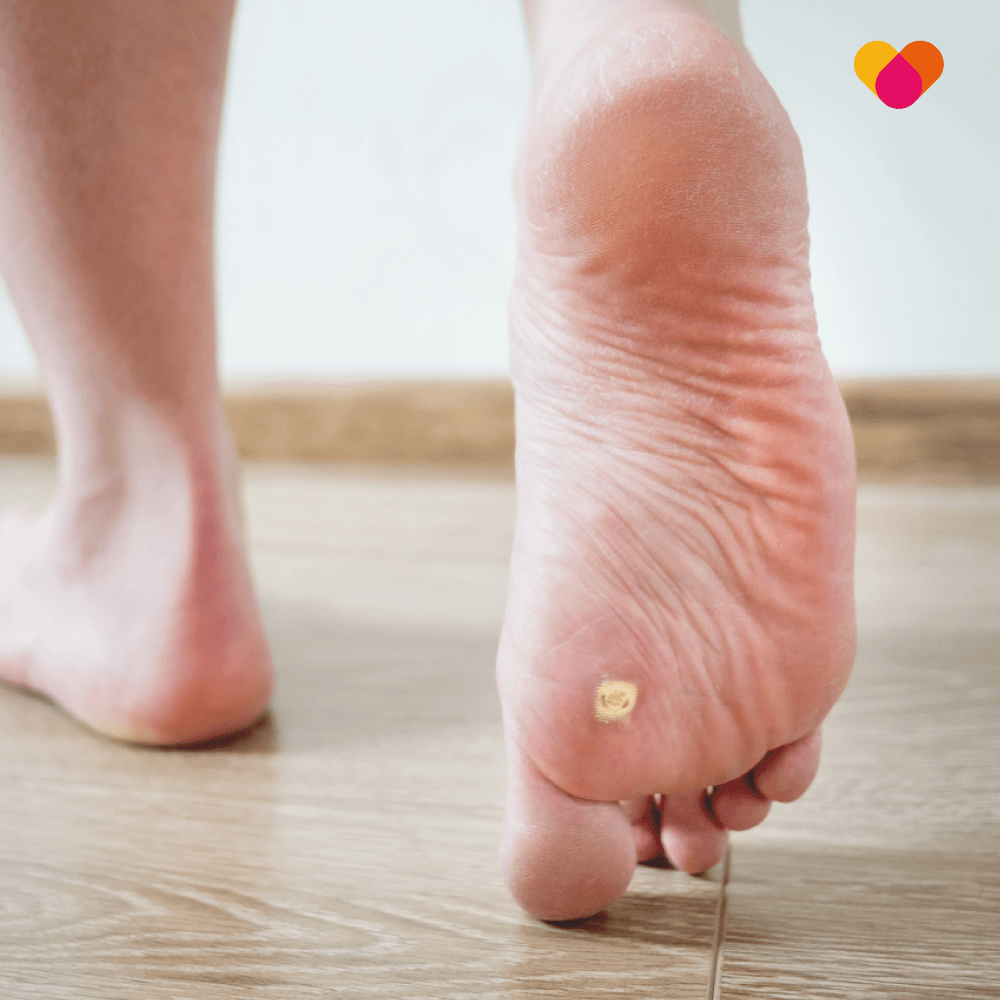
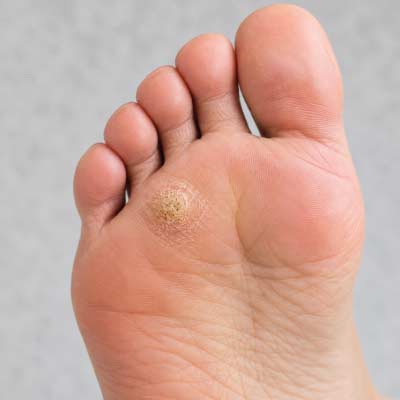
Although they are not always painful, a corn or callus can become increasingly uncomfortable if the pressure continues. Some people describe the sensation as walking on a small stone, particularly when a corn develops on the sole of the foot.
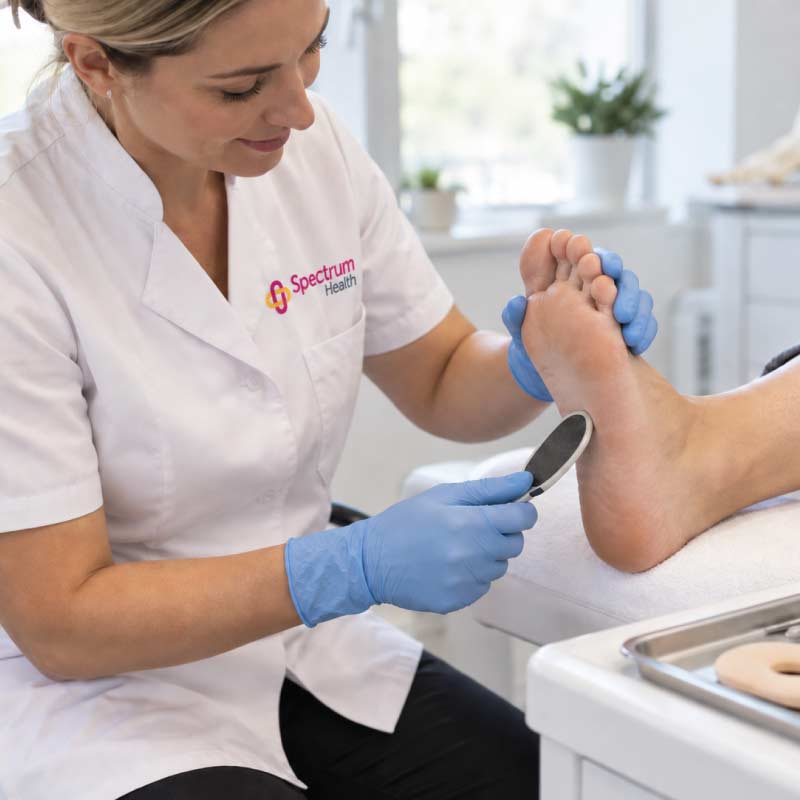
At Spectrum Foot Clinics, your clinician will examine the affected area and assess what may be contributing to the problem. Where appropriate, the thickened skin can be carefully reduced to relieve discomfort. Your clinician may also recommend changes to your footwear, cushioning, insoles or other steps to reduce pressure on the area.
Understanding the Problem
Corns and calluses are both areas of thickened skin, but they tend to develop differently.
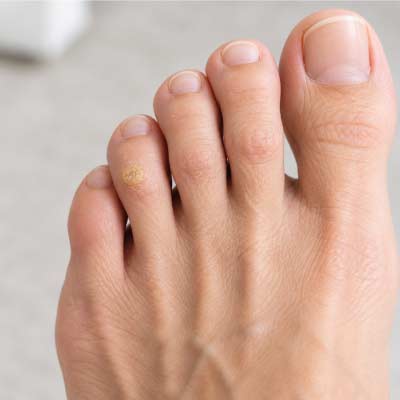
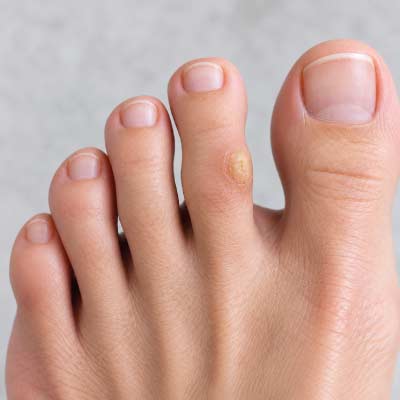
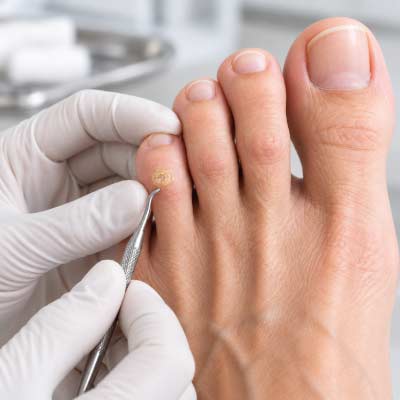
A corn is usually a smaller, concentrated area of hard skin. It often has a dense central core and may feel painful when pressed. Corns commonly form on the tops or sides of the toes, between the toes or on pressure points underneath the foot.
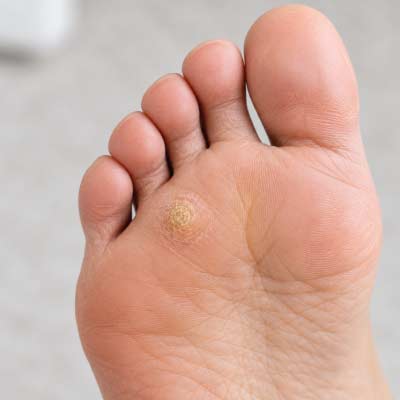
A callus is generally broader and flatter than a corn. Calluses frequently form on the soles of the feet, particularly under the heel or the ball of the foot. They may not be painful, but larger or thicker calluses can become uncomfortable and may crack.If you are unsure whether you have a corn, callus or another foot condition, a professional assessment can help identify the problem and the most appropriate next step.
Common Signs
Corns and calluses can look and feel different depending on where they develop. A verruca, foreign object or another skin problem can sometimes resemble a corn. Your clinician will examine the area before recommending treatment.
Common Causes
Corns and calluses form in response to repeated pressure or rubbing. The skin thickens to protect the area, but the build-up can become painful if the source of pressure continues.
Simply removing the hard skin may provide relief, but the corn or callus can return if the underlying pressure or friction remains. This is why assessment and preventative advice form an important part of treatment.
Types Of Corns We Treat

Hard corns are small, concentrated areas of thick skin that commonly develop on the tops or sides of the toes or underneath the foot. They can become painful when pressure is applied.

Soft corns form in moist areas between the toes. They are usually softer and paler than hard corns and often develop where adjacent toes rub against each other.

Corns can form on weight-bearing areas such as the ball, side or sole of the foot. These may feel particularly uncomfortable when standing or walking.

Long-standing corns can sometimes become more closely connected with fibrous tissue, nerves or small blood vessels. These may be particularly sensitive and require careful assessment and treatment.
Your Appointment
Treatment begins with an assessment of the affected area. Your clinician will check whether the problem is a corn, callus or another foot condition and discuss any symptoms you have been experiencing.
Where appropriate, treatment may include:

The treatment recommended will depend on the type, location and severity of the corn or callus, as well as your general health. People with diabetes should seek professional advice before treating corns, calluses or hard skin. Do not attempt to cut the area yourself. Tell the clinic about your diabetes when booking so that the appropriate assessment can be arranged.
What To Expect
Your clinician will ask about your symptoms, how long the problem has been present and whether it affects walking, exercise or your choice of footwear.
The affected skin will be examined to confirm whether it is a corn, callus or another condition. Your clinician may also look at your footwear, toe position and how pressure is distributed across your foot.
Where it is safe and appropriate, the thickened skin can be carefully reduced using sterile podiatry instruments. Treatment should not involve cutting healthy skin.
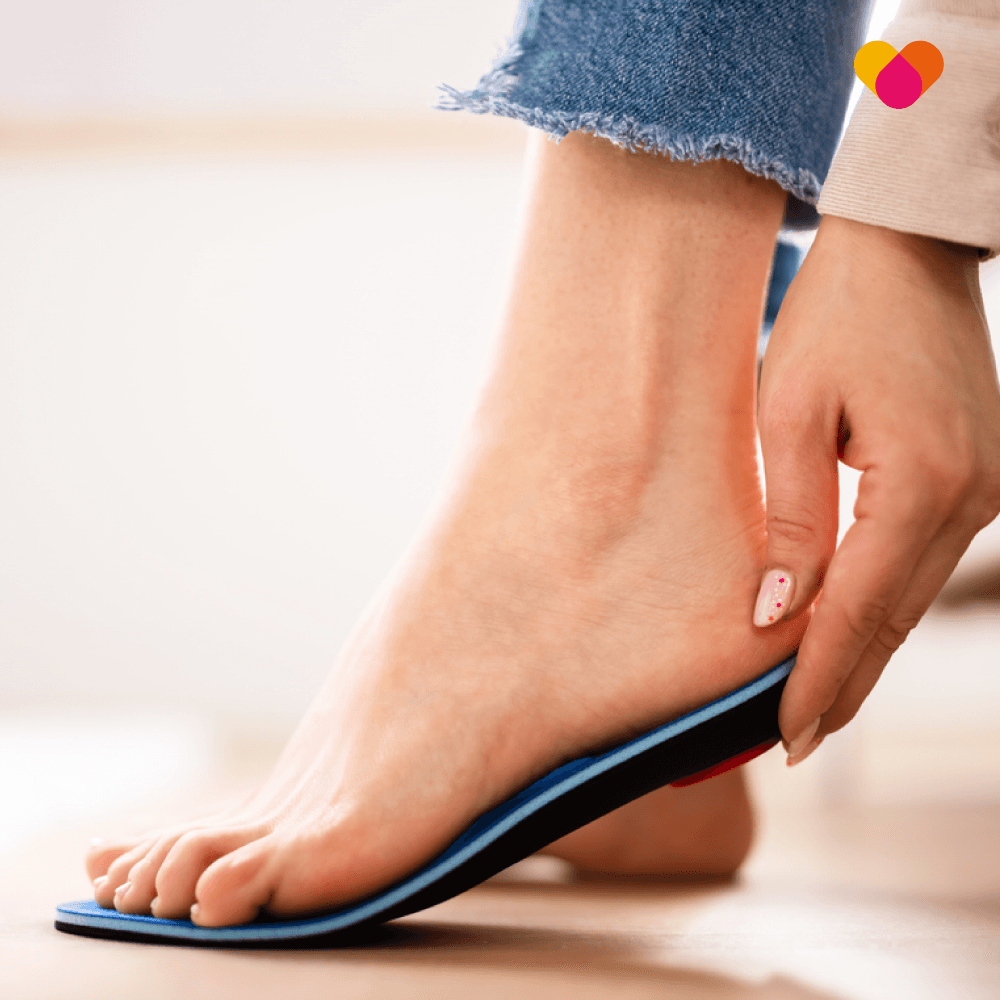
Your clinician will explain how to care for the area and may recommend footwear changes, padding, moisturising products, insoles or follow-up care.
Book Appointment
FAQ
Corns and calluses can return, particularly when the same area continues to experience pressure or friction. Treatment can reduce the thickened skin and associated discomfort, but longer-term improvement often depends on addressing the reason it developed.
Depending on the cause, your clinician may recommend:
The aim is not only to treat the immediate problem, but also to help reduce the likelihood of it returning.
Consider arranging an appointment if:
People with diabetes should not attempt to cut away corns or hard skin themselves. Professional foot care is particularly important when reduced sensation or circulation could make an injury more difficult to notice or heal.
Do not cut a corn or callus with a blade, scissors or another sharp object. This can damage healthy skin and increase the risk of bleeding or infection.
Some people may be able to manage mild hard skin by wearing properly fitting footwear, moisturising regularly and gently using a foot file. However, self-treatment may not be suitable if the area is painful, inflamed or broken, or if you have diabetes, reduced circulation or reduced sensation.
Corn plasters and other acid-based products are not appropriate for everyone and can damage the surrounding skin if used incorrectly. Ask a pharmacist, podiatrist or other qualified healthcare professional for advice before using them.
Treatment is generally intended to reduce discomfort, not cause it. Most of a corn consists of thickened, dead skin. However, some corns can be particularly sensitive, especially if they are long-standing or associated with nerves or small blood vessels. Your clinician will assess the area and explain the treatment before proceeding.
Yes. A podiatrist or appropriately qualified foot-care clinician can assess the corn and carefully reduce the thickened skin where appropriate. They can also look for factors that may be causing pressure on the area.
A corn can be treated, but it may return if the underlying pressure or friction remains. Footwear changes, padding, insoles or treatment of an associated foot problem may help reduce recurrence.
A corn usually develops over an area exposed to pressure or friction and may have a hard central core. A verruca is caused by a virus and may contain small dark dots or interrupt the natural lines of the skin. Because they can look similar, professional assessment may be helpful. If you think it may be a verruca, see our verruca treatment page.
Corns between the toes are often caused by adjacent toes rubbing together. Moisture between the toes can keep the skin soft, creating what is known as a soft corn. Footwear, toe position and prominent joints may contribute to the problem.
Appointment and treatment times vary depending on the type and extent of the problem. Your clinician will assess the area during your appointment and explain whether follow-up care is recommended.
People with diabetes should seek professional advice before treating corns, calluses or hard skin. Do not attempt to cut the area yourself. Tell the clinic about your diabetes when booking so that the appropriate assessment can be arranged.
Seek advice from an appropriate healthcare professional if the area is bleeding, producing discharge, becoming increasingly red or swollen, or if the skin has broken. Prompt assessment is particularly important if you have diabetes, poor circulation or reduced sensation.
Further Footcare Services
If a painful corn or callus is affecting your comfort, walking or choice of footwear, our podiatry and foot-care team can assess the problem and recommend appropriate treatment.