




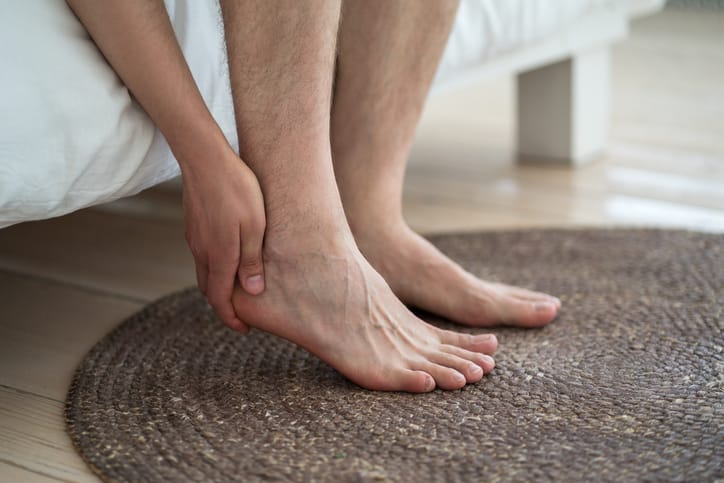
Corns and calluses are the body’s way of telling us that too much pressure is occurring in one place over either a short or long period of time. In most instances corns and calluses are not harmful, just unsightly, but they can get to a stage where they become painful and affect our everyday life. People of any age can get corns and calluses, but the older we get, the greater the risk of developing one or both, due to changes in lifestyle, medical history and the ageing process. The good news, though, is that they are treatable and preventable by attending your podiatrist regularly. In this blog, we will look at what corns and calluses are, how a podiatrist can treat them and how you can prevent them.
Corns
Heloma Durum (Hard corn)
Heloma Durum is the medical term for a hard corn. These are the most common corns seen in the general population and are often treated by podiatrists. Hard corn is a small area of intense pressure that has led to the skin around it growing faster, causing a large, thick piece of skin to develop inside the skin. These corns are normally found on the top of the foot, especially around hammer or claw toes and around the joints in the foot and are yellow or white in appearance. They are caused by bouts of friction, primarily from footwear that is too small, too tight, or too narrow.
Heloma Millare (Seed corns)
Seed corns are usually painless, but in people with diabetes, the elderly, and those who stand for long periods, they can become uncomfortable. Seed corns are thought to come about in areas of high pressure where the skin is drier than usual, leading to their formation. They often occur around the ball and heel of the foot and present as a “seed” under the skin.
Heloma Molle (Soft Corn)
Heloma molle, or soft corn, is a corn that normally develops in an area of intense pressure, along with a moist environment. This is why they most commonly occur in between toes, primarily the 4th and 5th toes. Due to the moist environment and the pressure, many people describe these as the most painful times of corns. They usually occur in people wearing tight shoes, with increased sweating, and in those with orthopaedic deformities such as a short 5th toe or weak intrinsic muscles of the 4th and 5th toes.
Treatment of Corns
The best and most effective treatment for corns is to see your podiatrist for an assessment of the area. Using corn plasters that contain acid, remove the hard skin around the corn, but don’t remove the corn itself. The acid in these plasters do not know the difference between normal skin and the corn, and can cause the skin to become wet and tender, leading to further problems such as pain and infection. By attending your podiatrist, you can receive the best possible treatment and start enjoying life again. In the clinic, a podiatrist will examine the corn and decide on the best course of action. Normally, a podiatrist will enucleate the corn, which involves using a scalpel to completely remove it. Afterwards, the podiatrist may or may not place a dressing or a pad to offload the area to help speed up healing. After removal of the corn, the podiatrist will discuss ways to prevent its recurrence, such as changing footwear, using orthoses, or, for soft corns, digital separation with a small silicone or gel device.
Calluses
Calluses occur due to either pressure or friction around a certain area or in certain diseases such as people with diabetes and rheumatoid arthritis. Calluses are a build-up of skin, accumulating into an area of thickened hard skin. They usually occur on the tips of the toes, the ball of the foot and around the heel area. Improper footwear, such as flip flops, sandals and slip-on shoes, causes friction between the shoe and the foot, leading to callus formation, as this is the body’s way of protecting itself.
Treatment of Calluses
Treatment of callus is very straight forward. Your podiatrist will evaluate the area and then with a sterile blade will peel away the callus from the affected area, until healthy non-callused tissue is seen. This treatment doesn’t hurt and can be done within a matter of minutes, depending on how much callus is present. After the treatment the podiatrist may either pad the area or use foot moisture on the area. Advice is key to reducing callus formation, with simple steps such as proper fitting footwear and moisturising the feet daily with a recommended foot cream from your podiatrist, which will help in keeping those unsightly calluses at bay.
Overall, corns and calluses may be inevitable, but by attending your podiatrist regularly for routine foot health check-ups, you can avoid the pain and discomfort of corns and calluses, and enjoy your life to the max!